Deep Breathing Technique
For Natural Pain Relief
Learn A Simple Breathing Technique
To Increase Relaxation And Comfort
Sometimes it seems like deep breathing -- also called belly breathing or abdominal breathing -- is the mother of all home remedies.
Not only does deep or abdominal breathing relax you, it can also help you control pain. And, it's wonderful for your long-term health.
On an energetic level, breath is an interface between the subtle and physical worlds, between the conscious and unconscious, between the upper and lower body and the upper and lower chakras. Deep breathing helps to integrate and harmonize our energies. By helping us to relax, it also helps our subtle energies shift more easily to a state of healthy balance and flow.
Deep breathing is just natural, optimal breathing -- nothing fancy. But all too often, we don't breathe optimally and naturally.
Many if not most of us are chest-breathers -- sipping air quickly and shallowly, instead of drinking it in deeply into the lower third of our lungs, as we are meant to do under normal circumstances.
The Deep Breathing Exercise
The exercise below will show you how to breathe optimally. "Belly breathing" (as it is also called) like this will help you relax, communicating directly with your central nervous system to turn off the stress response.But the exercise goes on to shows you how to supercharge the relaxation response -- which will help you manage and reduce pain.
- Sit or lie down comfortably. Inhale in through your nose and out through your mouth for a while. Consciously slow your breath down a bit.
- Inhale deeply (but comfortably) -- all the way into the lower third of your lungs. Your belly should expand when you inhale and return to normal when you exhale. This is diaphragmatic breathing.
(This should be a gentle, slow, natural movement. Don't try to fill your lungs till they practically pop!)
Place your hands flat on your belly, watching them rise and fall, to make sure that your abdomen expands as you inhale and contracts as you exhale.
Breathe like this for a while, until it feels comfortable and natural. Consciously see if you can slow it down a little more.
- At this point, if your breathing isn't already smooth and even, consciously even it out to a nice, smooth rhythm. Smoothing it out relaxes you and helps you feel grounded.
You can count to help you keep the rhythm even. (Unless it makes you tense to count -- in that case, just estimate.)
- After you've got the rhythm nice and even, slow down the exhale in comparison to the inhale, to super-charge the relaxation response.
Inhale for a certain number of counts, say 6 (or whatever is comfortable for you), then exhale for approximately twice as many counts. Do this for a minute or so. (As before, if it makes you tense up to count, then just estimate.)
By now you should be starting to feel more relaxed. Continue like this for as long as you wish.
- If at any time you start to feel dizzy or faint, you can either return to your normal breathing for a while, slow down your exhale, or lengthen the natural pause between your inhale and your exhale.
Watch out for backwards, or "paradoxical" breathing, the first few times you do this breathing exercise. Many people who have not been breathing optimally for a long time, when they first start trying to belly breathe, suck their bellies in as they breathe in, and stick their bellies out when they breathe out. That's exactly opposite of how it should be.
The FDA now approves breath training as a recognized treatment for hypertension, and more than 1,000 additional studies show its effectiveness in relieving anxiety, depression, chronic fatigue, and more.
Benefits of Deep (Diaphragmatic) Breathing
Here are just some of the benefits of optimal breathing:- Harmonizes the energy field
- Reduces stress by “turning off” your stress response (“fight or flight” mode) and activate your parasympathetic nervous system (“rest and digest” mode).
- Reduces anxiety
- Reduces depression
- Helps manage physical pain
- May improve physical problems such as heart issues and asthma
- Enhances the immune system
- Improves lymphatic flow
- Improves cardiovascular health
- Improves blood chemistry
- Calms and focuses the mind, increases alertness
- Makes healthy people feel even better
- Transcendental/unity experiences
Dr. Andrew Weil calls learning to breath correctly "the master key to self-healing," and says "If I had to limit my advice on healthier living to just one tip, it would be simply to learn how to breathe correctly."
Therapist and breathwork expert Gay Hendricks, Ph.D., says in At the Speed of Life: A New Approach to Personal Change Through Body-Centered Therapy, "If we could do but one thing with people who are in emotional pain, we would most likely focus on breathing."
Cautions for Using Deep Breathing Techniques
Because these exercises can make you light-headed, do not do them while driving, operating heavy machinery, standing on the edge of a cliff, etc. (Although when you become more used to deep breathing, you will probably find that it doesn't make you light-headed anymore.)
Please use good judgment in deciding when your pain warrants the attention of a medical doctor, and always follow up to find the root cause.
Learn more ways to use breath as a powerful tool for energy healing.
Return from Deep Breathing to Natural Pain Relief main page.
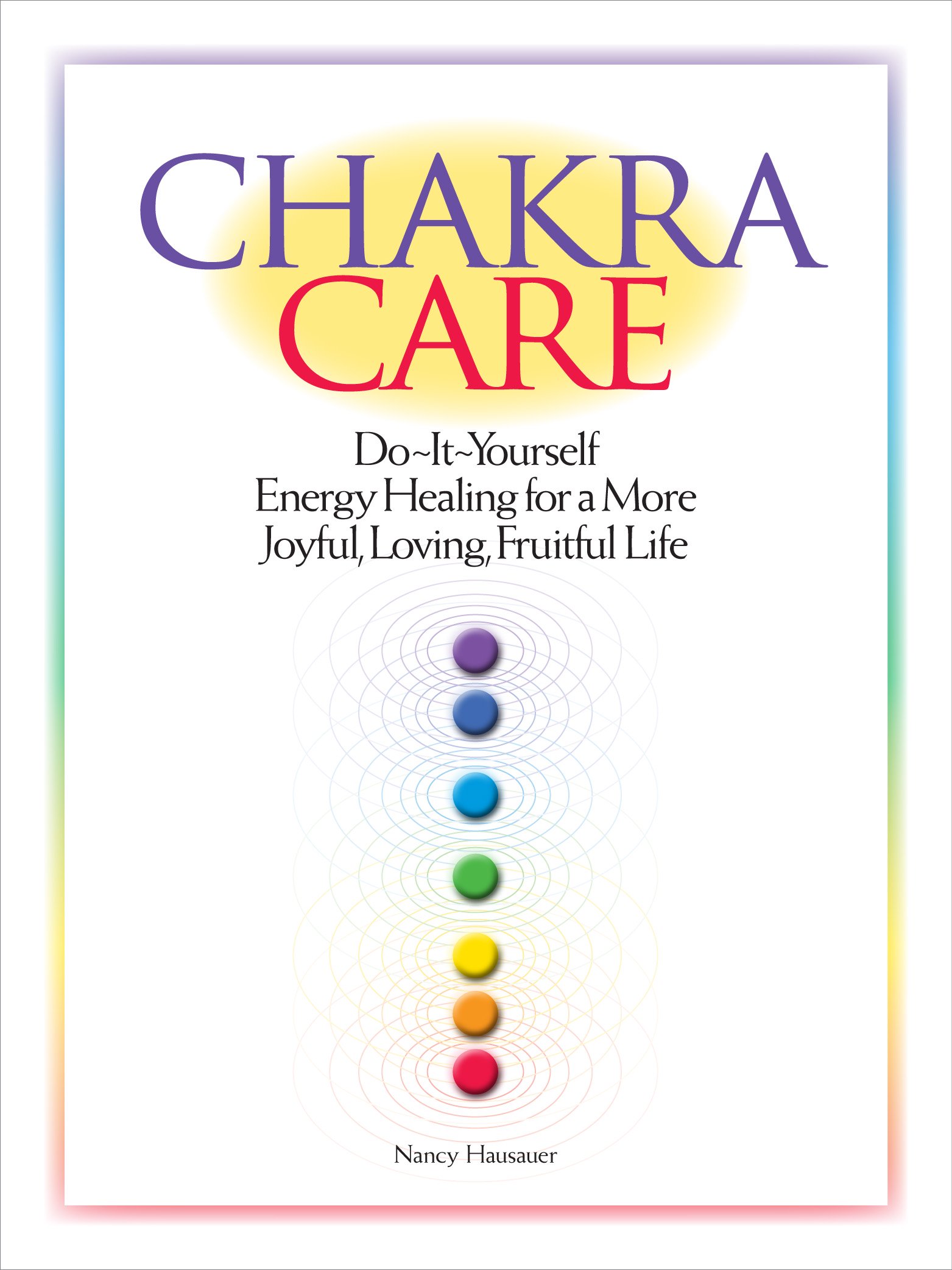
Interested in learning more about energy, energy healing, and the chakras? Try my book, Chakra Care: Do-It-Yourself Energy Healing for a More Joyful, Loving, Fruitful Life. You'll learn
to clear, nurture and support your chakras with 500 fun, down-to-earth
activities. A user-friendly, practical guide, available as a paperback
or Kindle. Learn more or buy it here.